

Espinakas kon Garbanzos

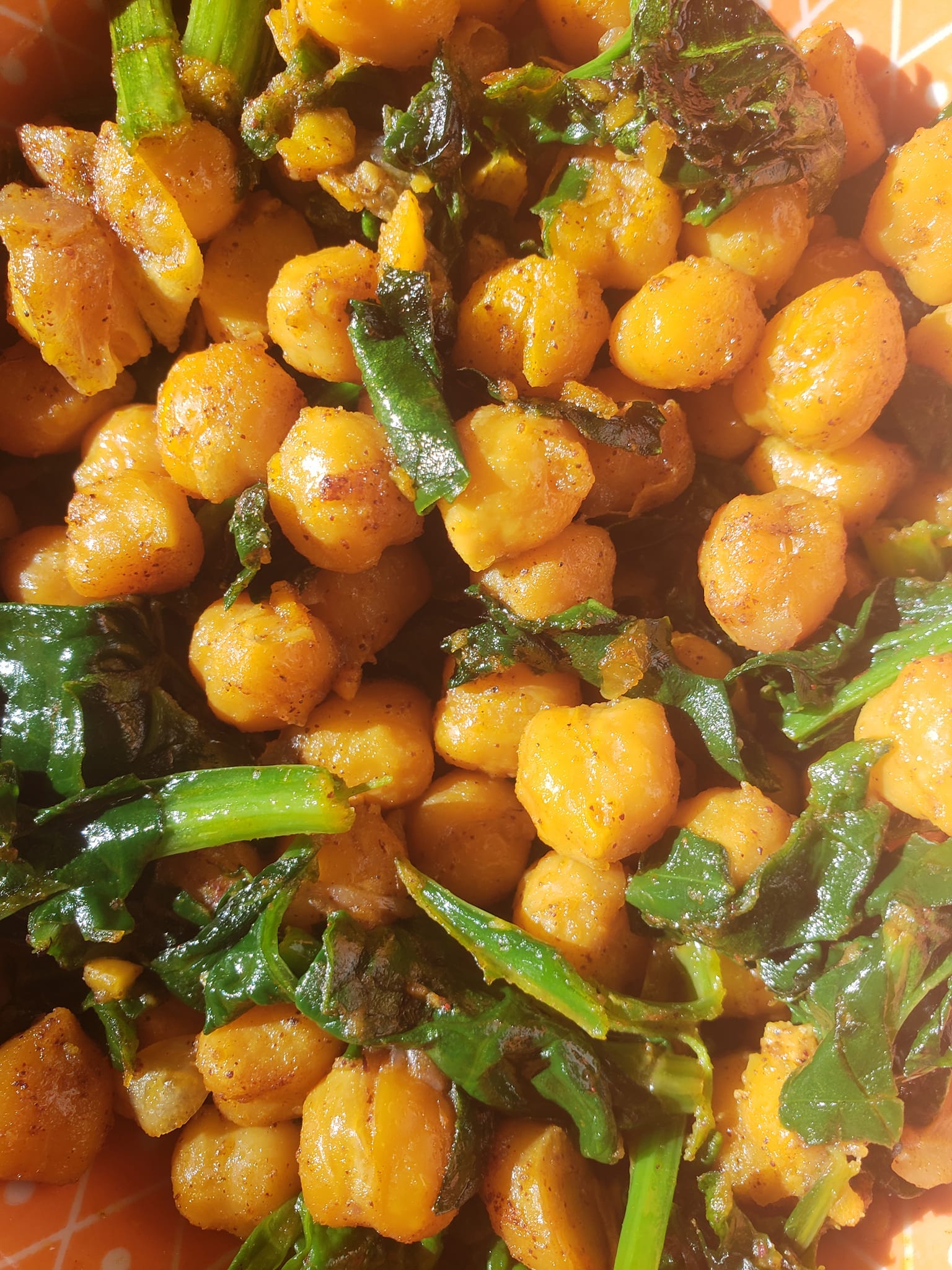
It has been very cold and snowy lately in Massachusetts, where I live, and at such times, I like to cook traditional comfort food. This week I made a simple version of espinakas kon garbanzos, a flavorful and nourishing dish from Seville with deep Sefardi roots that features one of my favorite winter herbs: spinach.
This velvety, leafy green is at its most flavorful and nutritious in winter. It was first grown and eaten in Iran. In the Middle Ages, traders from North Africa brought it to the land now known as Spain (which was then called Sefarad), where it became an important ingredient in Sefardi cuisine.
In 1492, following centuries of rising violence toward Jews, King Ferdinand II and Queen Isabella I issued the Alhambra Decree, which resulted in the expulsion of more than 150,000 Jews from the Kingdom of Spain. The Sefardim were informed that either they must leave Spain forever, or else convert to Christianity.
After the expulsion, the Jews who converted and remained in Spain soon had to face the Inquisition, an expansive police and spy network that investigated and punished converts who were believed to be still secretly practicing their faiths and not truly living as Christians. Some Jews sincerely converted to Christianity, while others only pretended to be Christian and secretly continued to practice Judaism and pass it down to their descendants. The Jews who left for Spanish or Portuguese colonies, hoping to put distance between themselves and the Inquisition, found that they continued to be hunted by the Inquisition, no matter the distance.
In writing his book, Juggling Identities: Identity and Authenticity Among the Crypto-Jews, Seth Kunin interviewed descendants of Jews who had converted to Christianity but continued to practice Judaism in secret. Several interviewees in New Mexico described a local crypto-Jewish tradition of going out to the fields around Yom Kippur to collect spinach: “we always did this great fast that came out about the time now that regular Jews celebrated Yom Kippur. We would all go out into the open fields and get wild spinach. . . . [W]e were not allowed, even if it was hot, to take water or eat anything. . . . Why were we picking food and we can’t eat? Toward the evening, we were given water . . . in little clay jars . . . and then we were washed, and we drank the water after we washed our hands.”
Other interviewees explained that the reason they went out to pick spinach from the fields was to prevent anyone that might be observing them from realizing that they were in fact fasting. They also shared that they ate the spinach at the conclusion of the fast, though they did not know if the spinach represented anything.
Many generations of Sefardim have enjoyed the health benefits of regular consumption of nourishing leafy greens such as spinach, prepared in diverse dishes in the repertoire of Sefardi cuisine. And many variations of espinakas kon garbanzos exist, but they all share the comforting and nourishing base of fresh spinach, chickpeas and olive oil. Traditional versions often include bread crumbs to thicken the sauce, and spices such as paprika, cumin or coriander.
Chickpeas are a nourishing and low-cost source of high quality protein and were an incredibly important staple in Sefardi communities. I strongly recommend using dried chickpeas instead of canned for maximum nutrition and best flavor. Learn more about chickpeas in Sefardi culture, cuisine and folk healing in my book, Sefardi Herbalism: An Introduction to Earth, Water, and Plant-Based Folk Traditions of the Sefardim.
Naomi’s Espinakas kon Garbanzos
Soak your chickpeas overnight, then boil them in water for 2-3 hours until tender. Add a whole onion and a whole celery root into the water as it boils along with a pinch of salt and some turmeric and black pepper. This will flavor the chickpeas.
When the chickpeas are tender, heat up a little olive oil on a skillet, then toss in chickpeas with a handful or two of spinach (I just roughly tear the leaves with my hands), 1-2 tbsp of tomato paste, and a few cloves of fresh, diced garlic. Saute it all together on medium heat for 3-5 minutes. As it is cooking, sprinkle paprika powder and salt to taste on the spinach and chickpeas. Turn off heat and serve immediately, with fresh lemon wedges.
Sources:
Sefardi Herbalism: An Introduction to Earth, Water and Plant-Based Folk Traditions of the Sefardim
Seth Kunin, Juggling Identities: Identity and Authenticity Among the Crypto-Jews
Fascinating, can’t wait to try this recipe